The greatest poetry does not simply describe the world. It unsettles it.
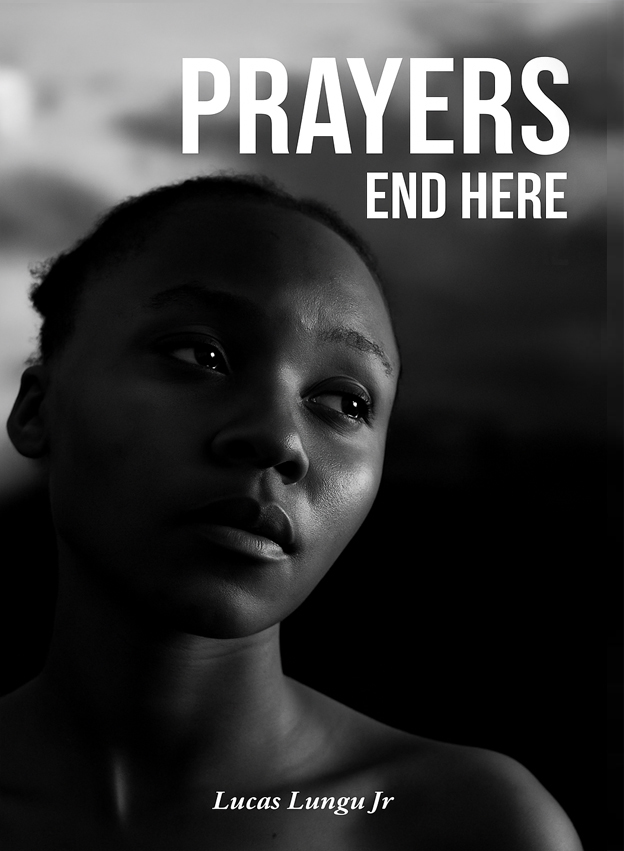
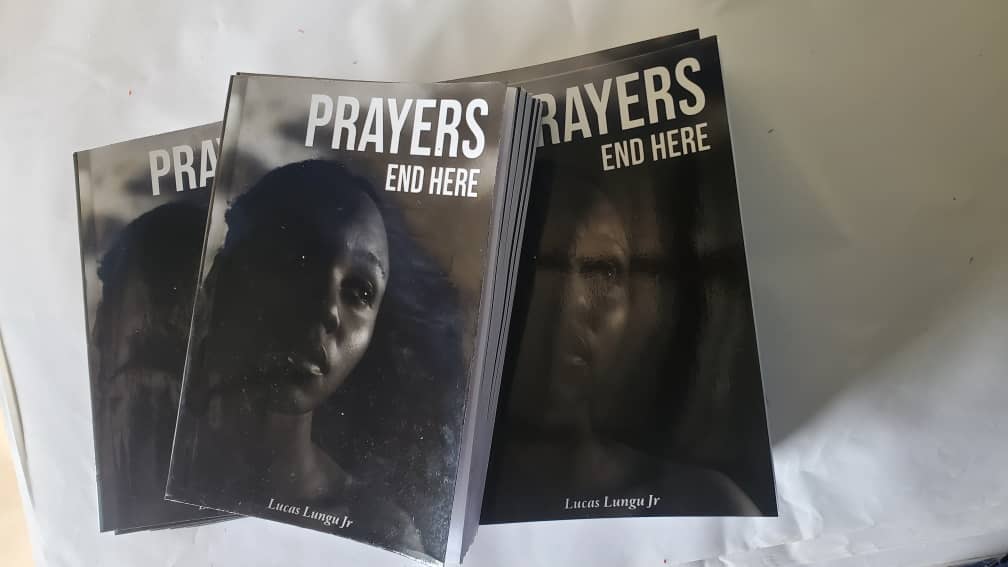
Prayers End Here by Lucas Lungu Jr., published by Zambian ARTS Publishing House, is one of those rare collections that transcends poetry and enters the territory of testimony. It is a book that confronts silence, interrogates faith, mourns injustice, and gives language to experiences that many societies have long refused to acknowledge.
In a literary landscape crowded with books that seek to inspire through comfort, Prayers End Here chooses courage instead. It speaks from places most writers avoid, from grief that has no funeral, from trauma that has no courtroom, and from prayers that seem to disappear before reaching heaven.
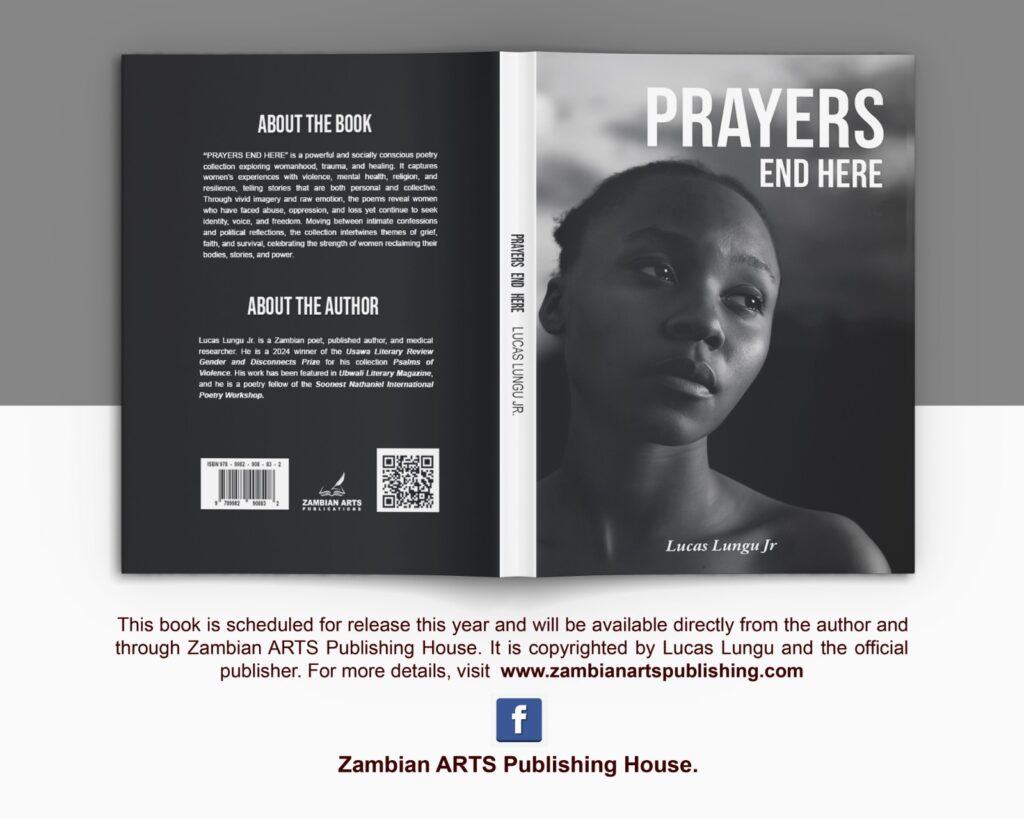
This is not a collection for readers looking for decorative verses or sentimental reflections. It is a sophisticated body of contemporary African poetry that combines emotional vulnerability with intellectual depth, creating an experience that lingers long after the final page.
Lucas Lungu Jr. demonstrates remarkable command of metaphor, transforming bodies into nations, borders into scars, and prayer into resistance. His imagery is expansive, cinematic, and deeply symbolic, allowing readers to move through landscapes shaped by violence, migration, religion, mental illness, womanhood, memory, and survival.
Every poem demands careful attention because every line carries multiple meanings. This is poetry that rewards slow reading and deep reflection.
Who Should Read This Book?
Readers of serious literary fiction and poetry will find this collection profoundly rewarding. It deserves a place in the libraries of scholars, students of African literature, poets, psychologists, gender advocates, social justice activists, educators, clergy, and anyone interested in the relationship between art and society.
It is equally important for readers who have experienced grief, depression, displacement, or personal loss, offering a language for emotions that often remain impossible to express.
Book clubs, universities, literary festivals, and cultural institutions would all find Prayers End Here an exceptional work for discussion because its themes extend far beyond poetry into philosophy, psychology, religion, politics, and human rights.
Why It Stands Above Similar Collections
Many contemporary poetry collections focus on romance, self affirmation, or personal storytelling. While valuable in their own right, they rarely attempt the ambitious emotional and intellectual scope found in Prayers End Here.
Lucas Lungu Jr. writes with extraordinary fearlessness, weaving together gender violence, mental health, migration, spirituality, sexuality, memory, and identity without reducing any of them to slogans or easy conclusions. The result is a collection that feels both deeply African and universally human.
The poems resist simplicity. They ask readers to confront uncomfortable realities while recognising resilience within suffering. Instead of offering escape, they offer understanding.
That distinction places this collection among the growing body of contemporary African literature that seeks not only to entertain but also to document, challenge, and transform.
More Than a Book
Prayers End Here is an important literary contribution to conversations about trauma, healing, and social justice. It gives voice to those pushed to the margins and reminds readers that poetry remains one of humanity’s most powerful tools for preserving memory and confronting injustice.
This is the kind of book that readers revisit years later and discover something entirely new. It deserves to be read in classrooms, discussed in literary circles, and shared among readers who believe that words still have the power to change how we see ourselves and each other.
Published by Zambian ARTS Publishing House, Prayers End Here is more than a collection of poems. It is an unforgettable work of contemporary African literature that deserves a place among the most significant voices of its generation.