What do you really know about Lusaka?
If you live in the city, you probably know its busy roads, markets, neighbourhoods and familiar landmarks. If you have visited Zambia, you may have seen some of the better-known parts of the capital.
But Lusaka has many stories that do not appear on a normal tourist map.
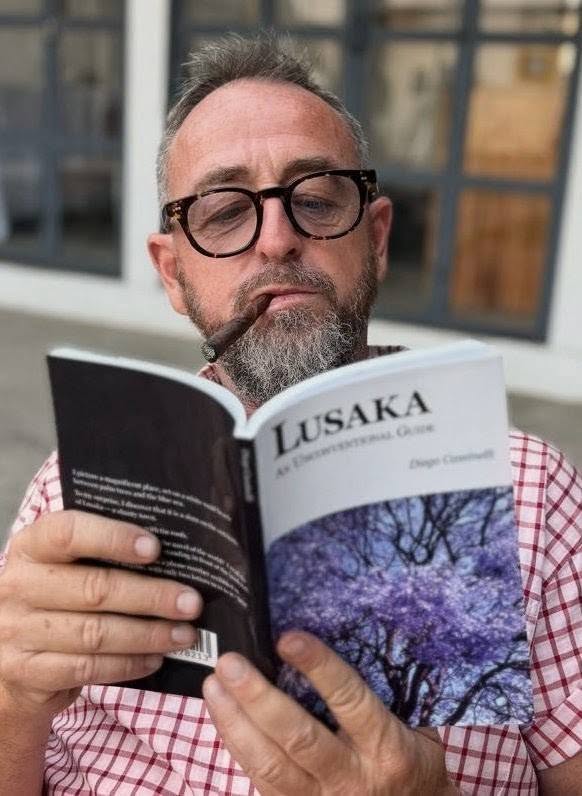
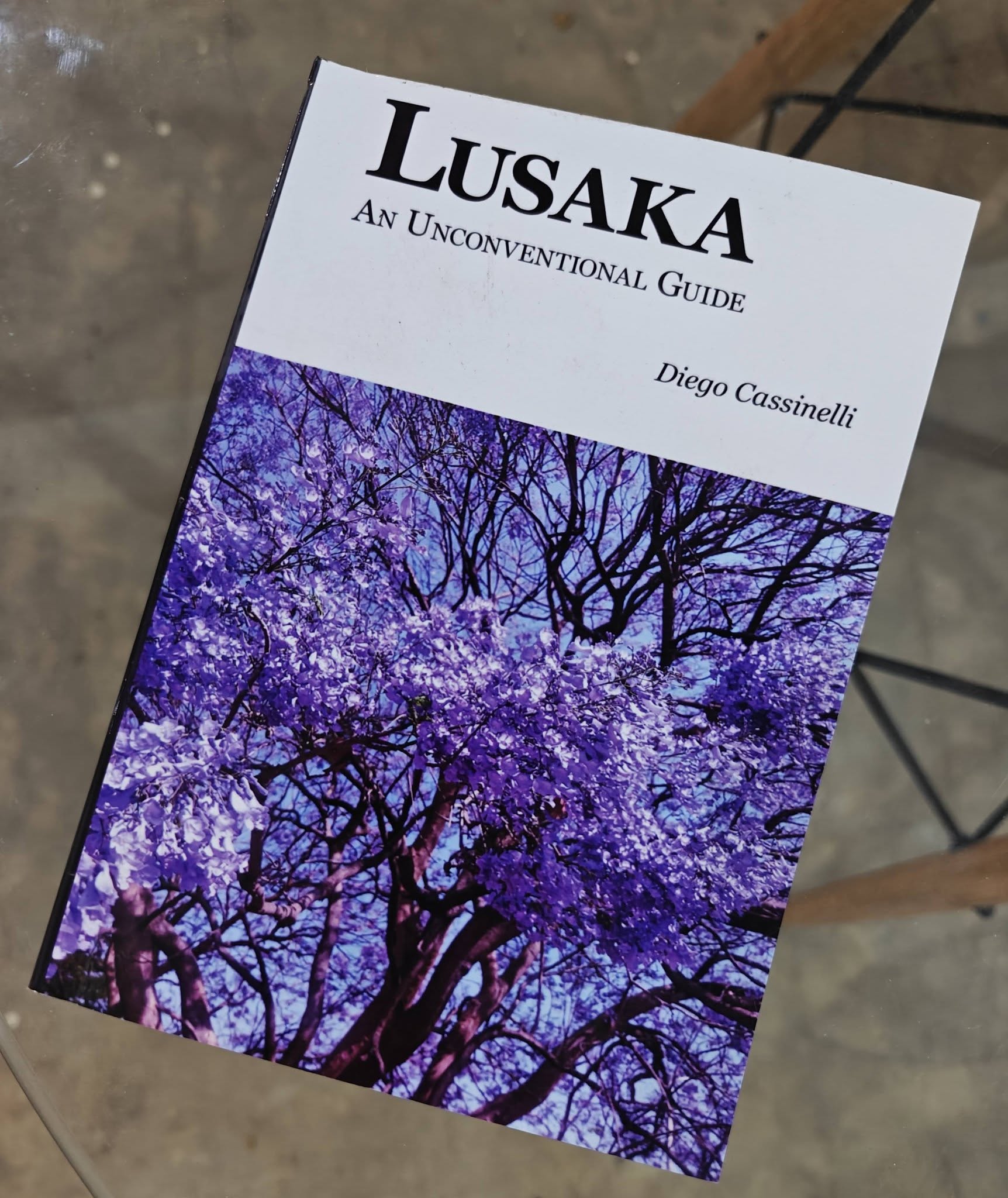
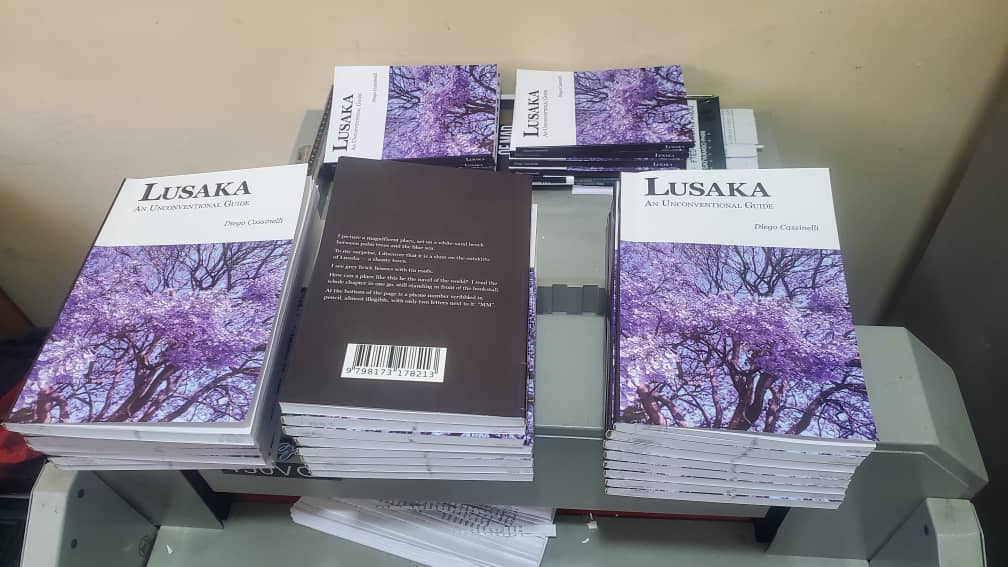
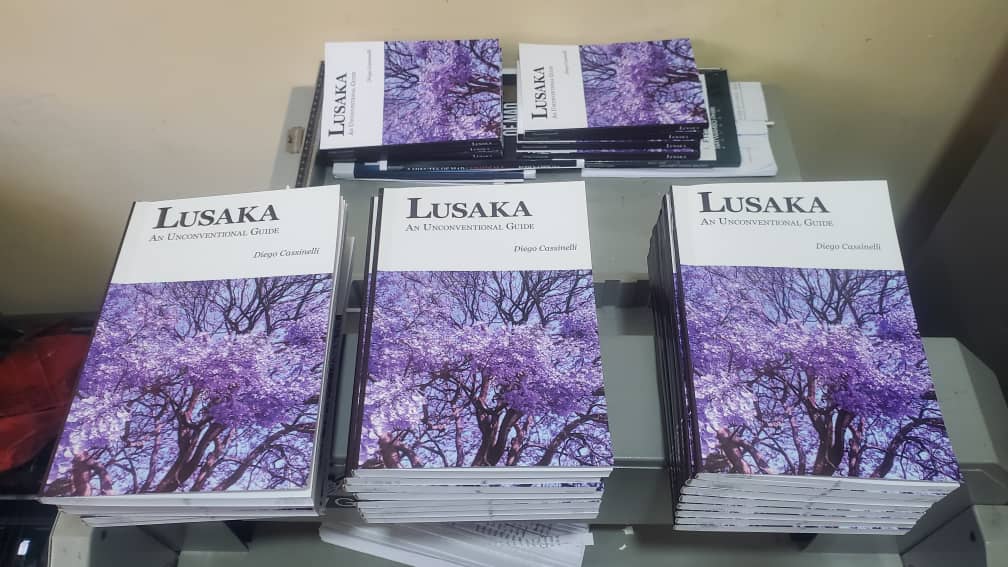
That is what makes Lusaka: An Unconventional Guide by Diego Cassinelli such an interesting read.
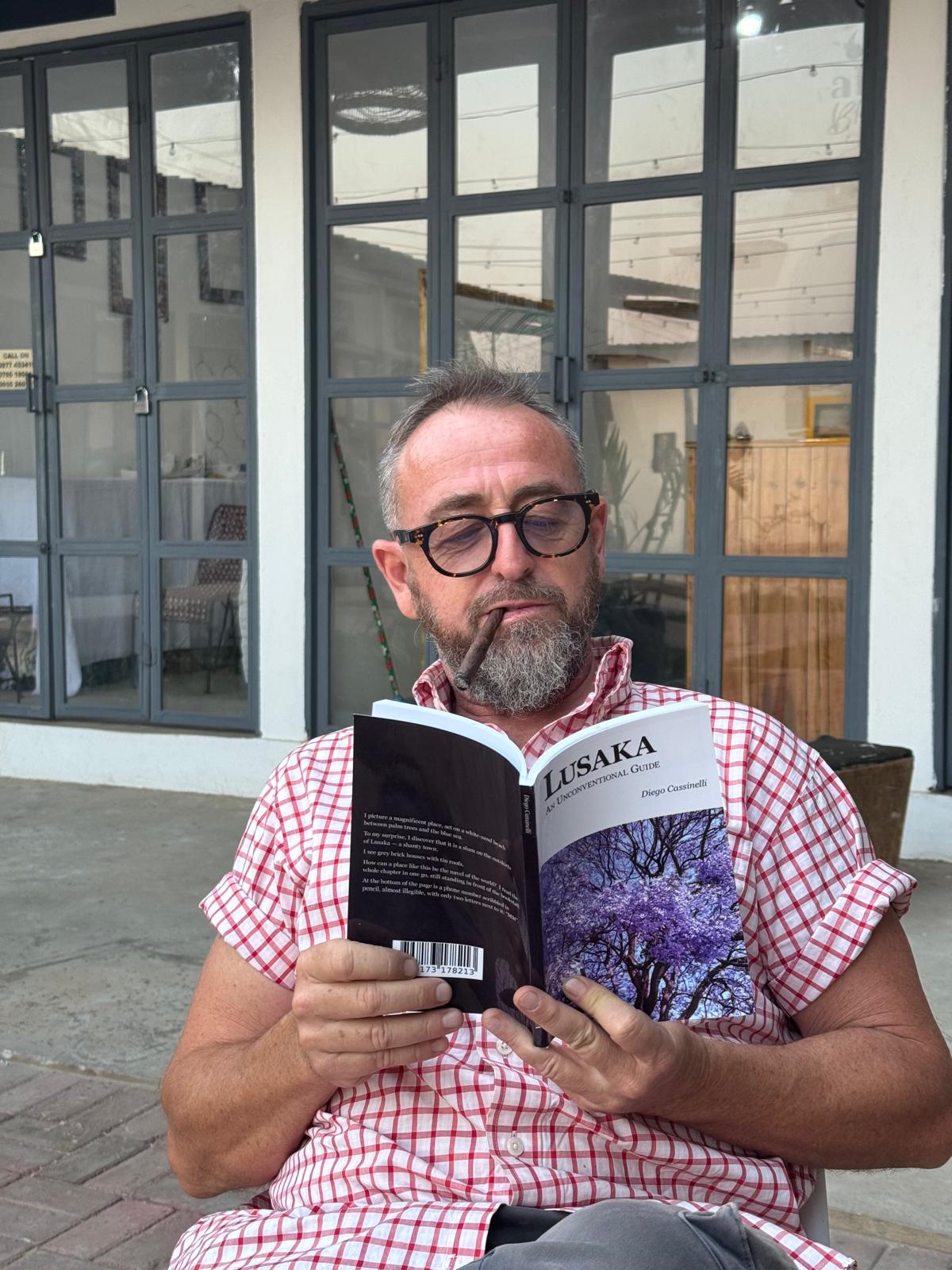
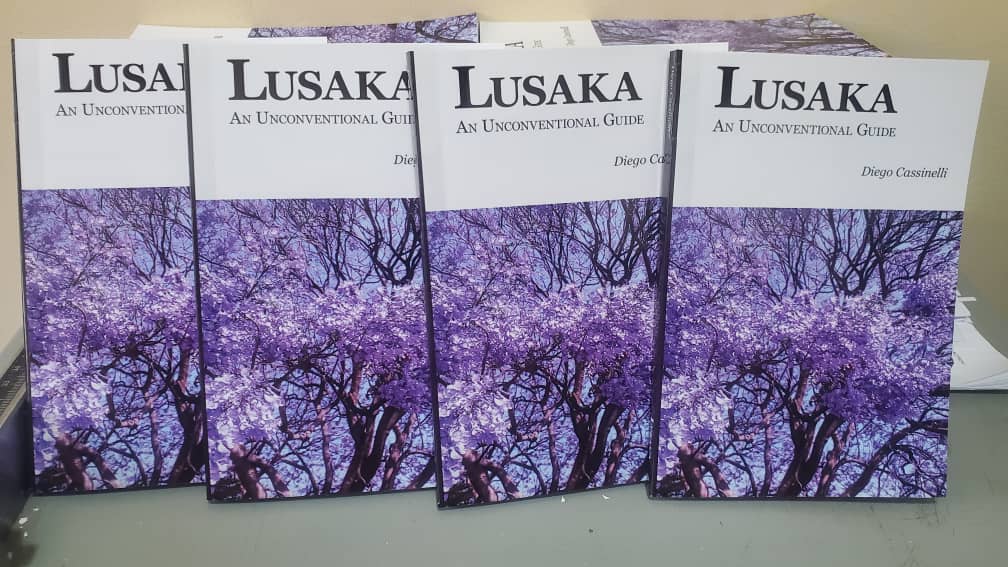
Now published and printed in English by Zambian ARTS Publishing House, the book takes readers through Lusaka in a very different way. It is part travel story, part history, part personal journey, and above all, a collection of encounters with the people and places that make the city what it is.
It Started With an Old Book
Diego’s connection with Lusaka actually began in Italy.
At a time when he was questioning the direction of his life, he came across a second-hand book called Lusaka Guide & Map. He knew very little about Lusaka at the time, but that small discovery stayed with him.
Eventually, it led him to Zambia.
Once in Lusaka, Diego met Mr Mwanza, an elderly Zambian guide and storyteller who knew the city extremely well. The two began travelling around Lusaka together, with Mr Mwanza sharing stories about the places they passed and the people they met.
Their journeys took place in an old white Pajero that they called the “Old Lady”, or the “Old Lady of Africa.”
And that Old Lady takes us into a Lusaka that many visitors might never see.
Seeing Lusaka Through Mr Mwanza’s Eyes
The book takes readers to places such as Soweto Market, Cairo Road, Kamwala, Chachacha Road, Freedom Way and Intercity.
But Diego is not simply ticking places off a list.
He meets traders, musicians, migrants, entrepreneurs, families and other ordinary people going about their lives. Along the way, Mr Mwanza shares stories about Lusaka’s past, including its colonial history, segregation and the development of the compounds that remain such an important part of the city.
This is where the book becomes particularly interesting.
Lusaka is not presented as a perfect city, nor is it reduced to poverty and hardship. Instead, the reader gets to see the different sides of the city: its energy, its struggles, its humour, its history and the people who keep it moving every day.
A City You Think You Know
There is something interesting about reading about places you already know.
You might have walked down a particular street hundreds of times without knowing why it is called what it is called. You might have passed through a market without knowing anything about the people who built their lives around it.
That is one of the things Diego’s journey does well.
A market becomes an opportunity to understand people’s livelihoods. A street leads into a piece of history. A conversation introduces a completely different way of looking at a familiar place.
Suddenly, Lusaka feels a little less familiar.
The Journey to Bauleni
One of the most memorable parts of the book is Diego’s journey to Bauleni.
Bauleni is not simply another stop on the itinerary. It is a place that carries personal meaning for Mr Mwanza, who once lived there.
As the Old Lady leaves Leopards Hill and heads towards Bauleni, Diego finds himself entering a part of Lusaka that he had imagined before ever visiting it.
What happens there challenges some of his own expectations and assumptions.
The final section, “The Night That Changes All the Others,” takes the journey into more difficult territory, looking at poverty and everyday life from a much more personal perspective.
Rather than treating poverty as a statistic, the book brings the reader closer to the people living through it.
It Is Also a Story About People
Although the book is centred on Lusaka, it is really the people who make the story memorable.
There is Mr Mwanza, whose knowledge of the city gives the journey its direction. There are the traders, workers, families, migrants and young people Diego encounters along the way.
There are also the stories behind the places themselves.
The book touches on Zambia’s history, religion, culture, migration, music, sport, markets and the development of Lusaka.
But Diego is also asking a much simpler question: what happens when we stop looking at a place from the outside and actually try to understand the people who live there?
That question sits at the heart of the book.
About Diego Cassinelli
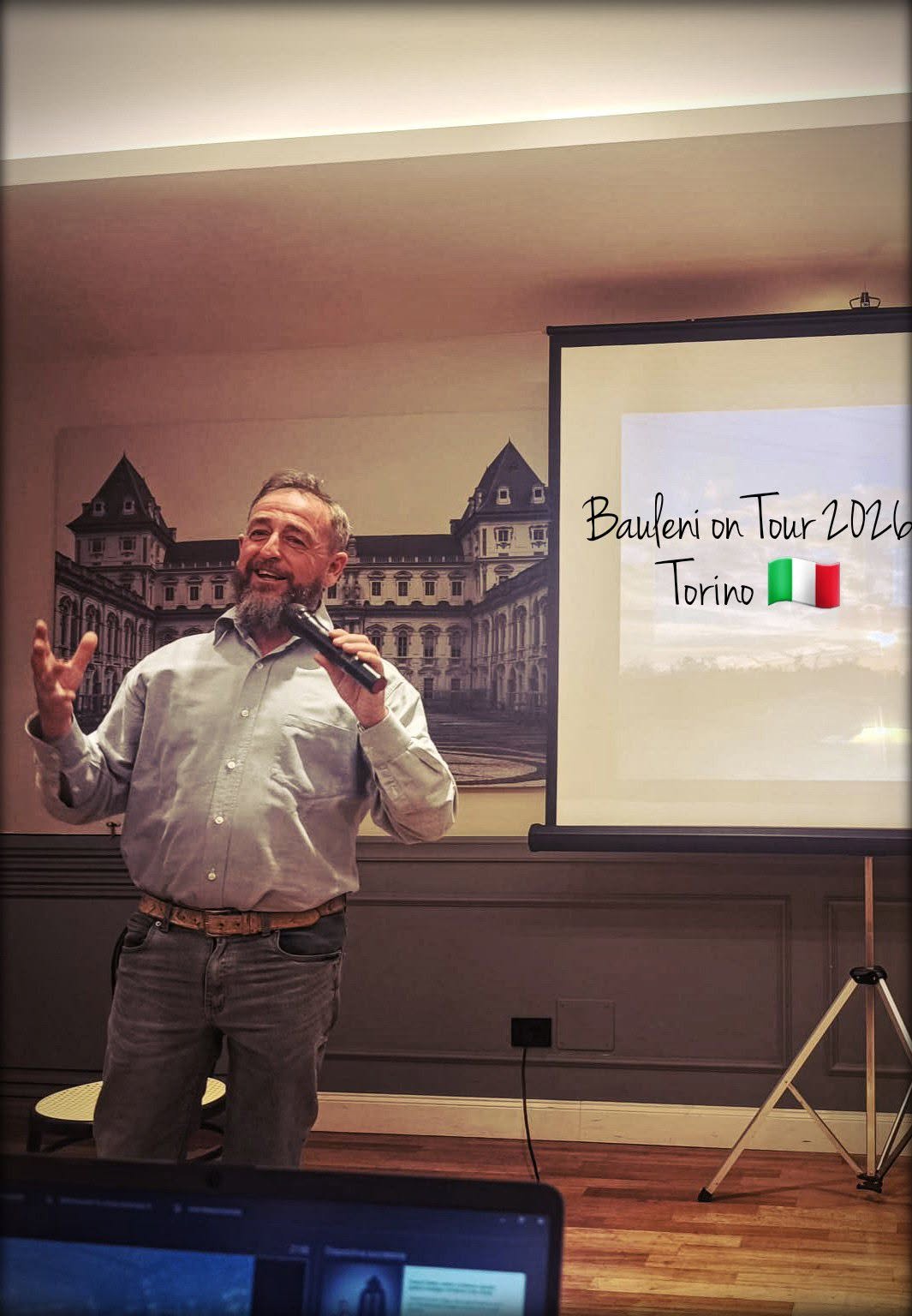
Diego Cassinelli was born in 1973 and grew up in Moncucco di Vernate near Milan, Italy.
He trained as a professional pastry chef and holds a degree in Educational Sciences, specialising in Social Education, from the University of Padua.
His work has taken him into very different environments and communities. He has worked with the Missionaries of Charity in Kolkata, supported Nigerian women experiencing trafficking and homelessness in Milan, worked in community and prison settings in Padua, and supported former child soldiers in Gulu, Uganda.
Since 2009, Diego has lived in Zambia.
He founded In & Out of the Ghetto, an organisation working to create opportunities for young people in marginalised communities and support grassroots development.
He later founded Vanilla Hood, an Italian pastry workshop in Bauleni that combines pastry-making with a social mission.
Diego speaks Italian, English and Chinyanja and has also contributed to publications including Nigrizia and Africa Rivista.
The Book Has a Purpose Beyond Reading
There is another reason this book is worth mentioning.
All proceeds from the book are donated to In&Out of the Ghetto, supporting the organisation’s work in Zambia.
So the book is closely connected to the communities and people Diego has spent years working with.
For readers, it offers a chance to discover Lusaka from a different angle. At the same time, buying a copy helps support work taking place in communities that Diego has become part of over the years.
Who Is This Book For?
You do not have to be a tourist to enjoy Lusaka: An Unconventional Guide.
If you live in Lusaka, you may recognise many of the places mentioned and still learn something new about them.
If you are Zambian but live outside Lusaka, the book offers another way of getting to know the capital.
If you have visited Zambia before, it may bring back familiar places while showing you sides of them you may have missed.
And if you have never been to Lusaka, the book gives you an introduction that goes beyond the usual descriptions found in travel guides.
It is particularly interesting for anyone who enjoys travel writing, history, culture and stories about everyday people.
Discover Lusaka Differently
Lusaka: An Unconventional Guide is not a typical guidebook telling you where to eat, where to stay and which attractions to visit.
It is much more personal than that.
It takes you into the streets with Diego and Mr Mwanza, introduces you to people along the way, and gives you a glimpse of the history and everyday life behind some of Lusaka’s most familiar places.
For anyone who thinks they already know Lusaka, that may be the most interesting part.
Sometimes, you have to look at a familiar place through someone else’s eyes to notice things you have been missing.
Discover Lusaka: An Unconventional Guide and see Lusaka from a different side.
About Zambian ARTS Publishing House
At Zambian ARTS Publishing House, we enjoy working with books that have something meaningful to say about Zambia, its people and its experiences.
We publish and support authors through publishing, editing, printing, distribution, branding and digital solutions, helping their work reach readers in Zambia and beyond.
Lusaka: An Unconventional Guide is one of those books that gives readers an opportunity to look at a familiar place a little differently, and we are pleased to have it available through Zambian ARTS.
Interested in getting a copy? Contact us or visit the Zambian ARTS Publishing House bookstore to place your order.